Lead Dominance Index
Interactive game tool for signed score-differential area, useful for separating final score from how long a team actually controlled the game.
Reed Rosenbacher builds basketball analytics projects that turn play-by-play, season, and draft data into practical evaluation tools. The site stays centered on interactive work for NBA front office executives, with each project designed to support faster questions about team quality, game control, player evaluation, and predictive signal.
Interactive game tool for signed score-differential area, useful for separating final score from how long a team actually controlled the game.
Draft study for first-round picks selected at age 23 or older and their career DPM outcomes.
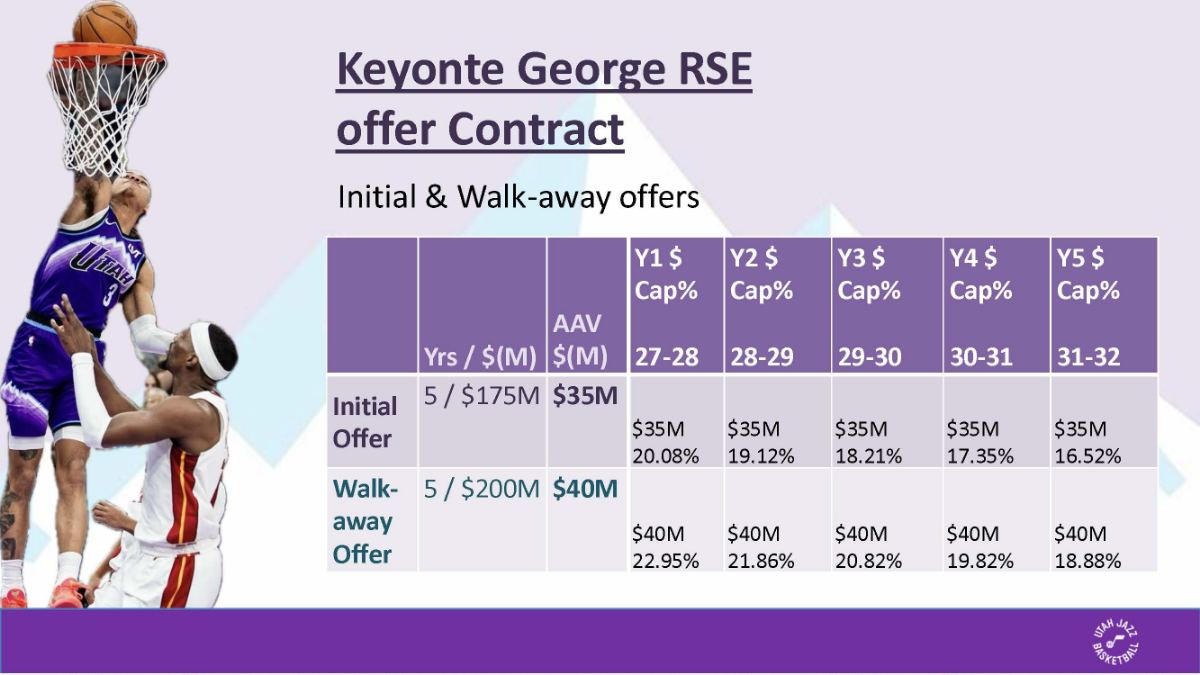
Slide deck for the mid-season RSE pitch project.
These prompts are for refining each tool's opening description.
Select a project from the dashboard or use the tabs below. All existing tools and datasets remain available.
Interactive project views for Reed Rosenbacher's basketball research, from game control metrics to draft and possession studies.
This tool measures how much and how long a team controlled an individual game by integrating score differential over time. For front office use, it helps distinguish a narrow final margin from the underlying game script.
To refine this top description, provide the preferred thesis, target use case, and any methodology caveat Reed wants stated first.
| Start | End | Team A | Team B | Diff | Duration | Control | Signed Contribution |
|---|
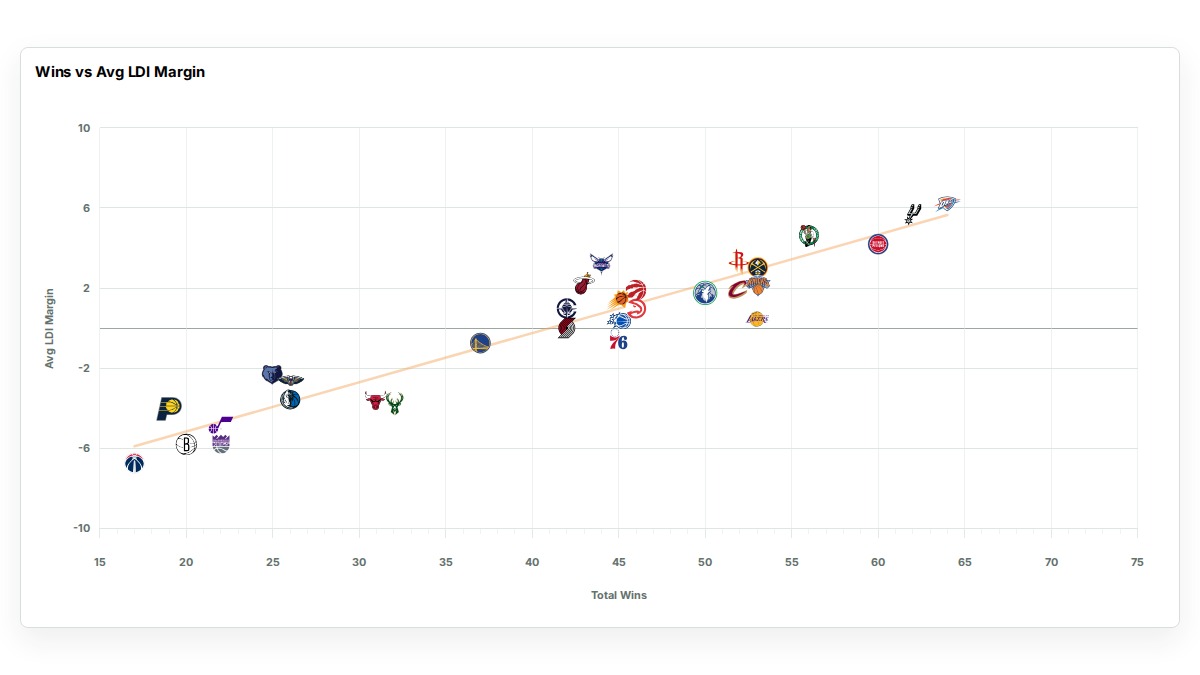
This view ranks NBA teams by sustained scoreboard control across a season and compares that control signal to wins. It is framed for front offices evaluating whether a team's record matches the way it actually controlled games.
To refine this top description, provide the exact front-office question Reed wants this project to answer.
Regular season team LDI from nbastatsv3, ranked by signed point-time control.
Waiting for season data
| Team | Avg LDI/Game / 48 Min | Actual Wins | Predicted Wins | Error | Predicted Win% |
|---|
| Rank | Team | Record | Games | Signed LDI | Positive Lead Area | Opponent LDI | Time Leading | Avg LDI/Game / 48 Min |
|---|
This tool evaluates whether season-level LDI has out-of-sample predictive value for team wins. It is intended as a front-office sanity check: does the game-control metric add signal, or is it mainly descriptive?
To refine this top description, provide how aggressive Reed wants the claim to be and which benchmark metrics should be mentioned.
Waiting for season data
Lead Dominance Index (LDI) is treated here as a continuous-game measure of scoreboard control rather than as a box-score efficiency statistic. For each interval between observed score changes, the score differential is held constant and multiplied by the interval length; the team-season value is the signed sum of these point-time areas. Formally, for interval j, LDI = sum(D_j * delta_t_j), where D_j is the team's score differential and delta_t_j is elapsed game time. The displayed predictor, Avg LDI/Game/48, divides each team's season total by games played and normalizes the result to a 48-minute game, which makes lockout, overtime, and pace-adjacent timing differences less dominant. This construction follows the same premise that motivates score-process models in basketball: the evolving score differential contains information about team strength and win probability, not merely the final score. Stern's Brownian-motion model of sports scores is the statistical precedent for treating the game margin as a time-indexed process, and Kubatko, Oliver, Pelton, and Rosenbaum provide the broader basketball-analytics basis for evaluating team performance through normalized, possession-aware and efficiency-oriented summaries.
The predictive test is intentionally out of sample. All available regular seasons are ordered chronologically. For a held-out season s, the model fits a one-variable linear regression on prior seasons only: Predicted Win% = alpha + beta * Avg LDI/Game/48. The fitted equation is then applied to each team in season s, predicted win percentage is bounded to the interval [0, 1], and predicted wins are obtained by multiplying by games played. The table reports season-level accuracy, mean absolute error, root mean squared error, R2, correlation, and the largest team miss. Accuracy is defined as 1 - total absolute win error / total games, so it expresses the share of scheduled games not lost to absolute prediction error. For the earliest seasons, where no prior-season training set exists or the prior set is too small for a stable regression, the model trains on all other seasons and flags that fallback in the coverage statement. This design follows the out-of-sample validation logic emphasized by Sill in adjusted plus-minus work: a metric intended to explain winning should be judged by its performance on games or seasons not used to estimate the model, because in-sample fit can reward noise.
LDI should not be read as a proven replacement for plus/minus. If plus/minus means team point differential or net rating, LDI is usually expected to be less directly predictive of season wins than plus/minus, because plus/minus is the realized scoring margin that most closely determines wins and losses. NBA Stats defines net rating as team point differential per 100 possessions, and Basketball-Reference's Pythagorean wins framework estimates expected wins directly from points scored and allowed; both conventions reflect the empirical strength of aggregate scoring margin as a win predictor. LDI adds a different signal by preserving when the margin occurred: a team that leads by double digits for 40 minutes and wins by one will rate very differently from a team that is even all night and wins by one, even though both games have the same final margin. That temporal information can describe control, pressure, and game script, but it also creates reasons for weaker win prediction: late-game fouling, garbage time, deliberate clock management, and comeback volatility can make sustained control diverge from final margin. In short, LDI is best interpreted as a complementary measure of dominance shape. It is more descriptive of how a team controlled games, while team plus/minus or net rating remains the cleaner benchmark for predicting the number of games won.
If plus/minus instead refers to raw player plus/minus, the comparison changes. Raw player plus/minus measures the score change while a player is on the court, but Sill notes that unadjusted plus/minus is confounded by teammates, opponents, lineup collinearity, and overfitting; adjusted plus-minus and regularized adjusted plus-minus were developed precisely to correct those problems. LDI in this project is a team-season statistic, so it avoids individual lineup attribution but also does not identify player value. The appropriate conclusion is therefore limited: team LDI may be more stable and interpretable than raw single-player plus/minus for describing team control, but it should be expected to trail team net rating or point differential as a pure season-win predictor unless a direct head-to-head model shows otherwise.
Sources: Hal S. Stern, A Brownian Motion Model for the Progress of Sports Scores; Justin Kubatko, Dean Oliver, Kevin Pelton, and Dan T. Rosenbaum, A Starting Point for Analyzing Basketball Statistics; NBA Stats, Stat Glossary; Basketball-Reference, Glossary and Pythagorean Wins definition; Joseph Sill, Improved NBA Adjusted Plus-Minus Using Regularization and Out-of-Sample Testing.
Each row is one held-out regular season. Accuracy follows the article-style predicted-wins comparison.
| Season | Train Seasons | Teams | Formula | Accuracy | MAE | RMSE | R2 | Correlation | Largest Miss |
|---|
This view samples score margin at possession rows to describe team control in a possession-aware format. For front office users, it gives a second lens on whether scoreboard control persists when the unit of analysis shifts from clock time to possessions.
To refine this top description, provide whether the description should emphasize pace adjustment, possession context, or comparison to the time-based LDI model.
Possession LDI uses the possession-based model: average signed score margin sampled at possession rows.
| Rank | Team | Record | Games | Possessions | Possession LDI |
|---|
This study reviews first-round picks drafted at age 23 or older and tracks their career DPM outcomes. It is aimed at front offices weighing draft-age risk, role-player value, and the historical return profile of older prospects.
To refine this top description, provide which draft philosophy or scouting question Reed wants this project to foreground.
| Player | Draft Year | Pick | Draft Age | DPM Seasons | Career Avg DPM | Minutes Weighted Avg DPM | Status |
|---|